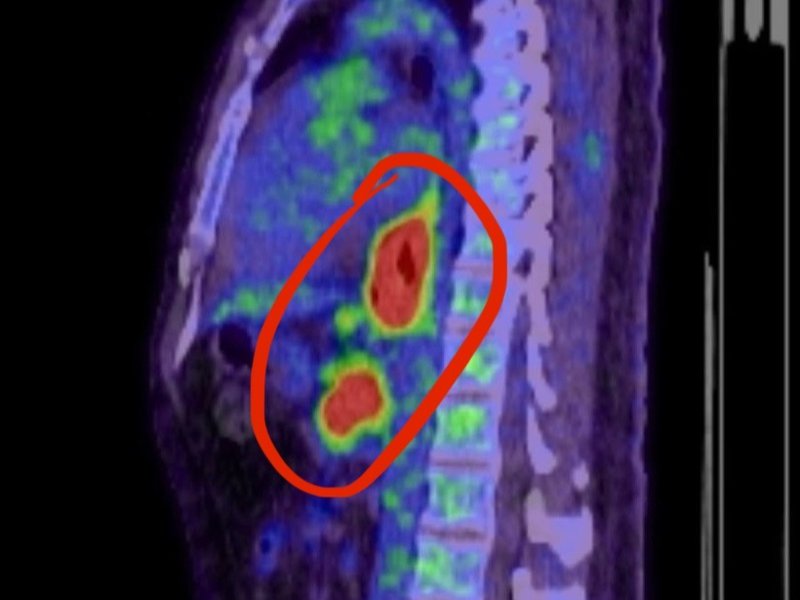
In October 2024, an endoscopy found a 9+cm tumour in my oesophagus. Within a few weeks I had a stage IV diagnosis, metastatic disease in my lymph nodes, and an 11.5-month prognosis. My youngest son had just turned one.
In this guide:
- Step 1: Get Your Tumour Sequenced Before Anything Else
- Step 2: Check Every Clinical Trial You Qualify For
- Step 3: Support Your Terrain – Get Your Body Ready
- Step 4: Build a Personalised Protocol With an Integrative Doctor
- Step 5: Set Up Your Treatment Infrastructure
- Step 6: Dial In Your Environment and Lifestyle
- Step 7: Assemble Your Team – and Make Them Collaborators
- The Questions I Would Ask My Oncologist on Day One
- The Mindset That Underpins Everything
- Can You Survive Stage 4 Cancer?
- Frequently Asked Questions
- Where to Start
I had no roadmap. No plan. Just panic.
I’m not writing this for sympathy. I’m writing it because eighteen months later, my scans show no visible disease (NVD). I’m very near to being cancer-free. And I didn’t get here by sitting quietly and accepting (or doing 😉) what I was told.
If I were diagnosed today, knowing what I know now, here’s the roadmap I’d follow from day one.
NOT instead of conventional treatment.
Alongside it.
Layered on top.
Informed by science, built through lived experience, and driven by one conviction: my life is mine to fight for.
This is the document I wish someone had handed me in that plastic chair at Bracknell Healthspace when a consultant told me this was terminal and I was palliative care only.
Step 1: Get Your Tumour Sequenced Before Anything Else
The very first thing I’d do – before starting any treatment – is get next-generation sequencing done on my tumour.
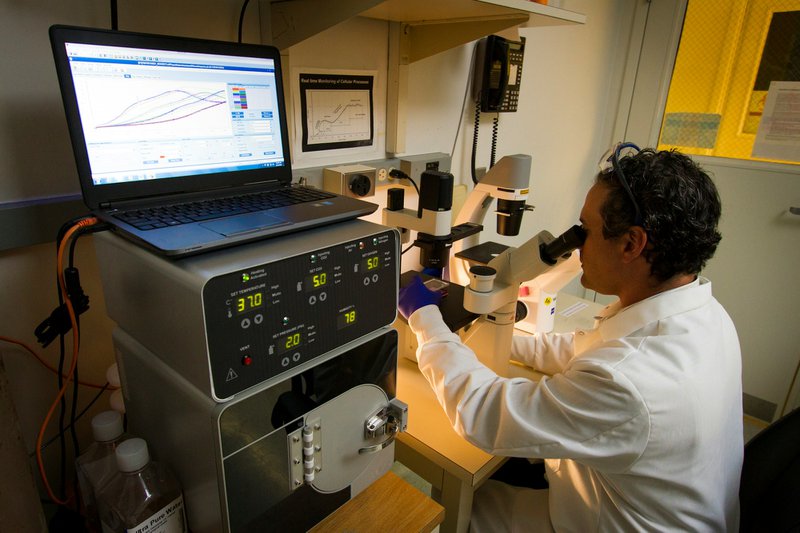
When I was diagnosed, my NHS team noted there were a few different chemotherapies available. Chemo sensitivity showed the one I eventually agreed to, CAPOX, was one of the most effective for my specific circumstances.
It’s also a standard protocol.
But, here’s what most patients are never told: treatment without a tumour profile is like throwing darts in the dark. Two people with the same cancer type can have entirely different molecular signatures – and respond to entirely different treatments.
Having initially decided to decline chemo (they projected very little extra in terms of increased longevity, and at a significant quality of life cost), I went to Astron Health for comprehensive genomic profiling. The results confirmed I was likely to respond well to CAPOX, which gave me confidence to proceed. But that was only part of the value. The sequencing also identified off-label drugs and supplements with real mechanistic potential for my specific mutation profile – options that were never mentioned in any NHS appointment.
This isn’t a criticism of the NHS. It’s a statement of fact: the NHS doesn’t routinely offer next-generation sequencing to every (or very many at all) cancer patient, not yet anyway – it is on the 10y cancer plan though. If you don’t ask, you do not get… And if you don’t get it, you’re making treatment decisions with incomplete information.
What I’d do differently: I’d have this done within the first week.
Not after three months of research and checking the pros and cons of each different company a million times.
Not when things stop working.
Not when I’m out of other options.
Immediately.
The data shapes everything that follows.
Step 2: Check Every Clinical Trial You Qualify For
Most cancer patients have no idea how many clinical trials exist for their diagnosis. I certainly didn’t. The assumption is that if a trial is relevant, your oncologist will mention it. That assumption is wrong!
Oncologists are stretched. Really stretched. They manage hundreds of patients. They very likely won’t be aware of every trial recruiting across the UK, Europe, or internationally – especially those outside their own hospital network.

I used Trialport to cross-reference my diagnosis against live trials. It’s much faster and more comprehensive than anything I could have done manually, and it surfaced options I’d never have found through the NHS pathway alone.
Some of those trials were for combinations of drugs I was already considering. Some were for novel approaches I’d never heard of. The point is: you can’t evaluate options you don’t know exist.
What I would do differently: I would run this search the same week as sequencing, and I would revisit it every time my treatment plan changed. Trials open and close constantly. The landscape shifts.
Step 3: Support Your Terrain – Get Your Body Ready
Here’s something that took me too long to understand: cancer treatment isn’t just about killing the tumour. It’s about whether your body can survive the process of killing the tumour.
Chemotherapy is brutal. It doesn’t discriminate between cancer cells and healthy ones. If your liver is under strain, your gut lining is compromised, your inflammation markers are through the roof, and your mitochondria are struggling – you’ll tolerate treatment badly, recover slowly, and have fewer options when things get difficult.
This is where the concept of “terrain” comes in. The terrain is the environment your cancer exists in – your gut health, your inflammation levels, your metabolic state, your toxic load. Conventional oncology focuses almost entirely on the tumour itself. Integrative oncology asks: what’s the tumour living in, and can we make that environment less hospitable?
I worked with the incredible Amanda King, ND on liver support, gut integrity, inflammation control, and mitochondrial resilience. Amanda’s depth of knowledge and her ability to build protocols that actually work alongside conventional treatment has been by far one of the most important factors in my journey. The goal was simple: make my body strong enough to endure treatment and recover faster between cycles. Give it every chance we can.
It worked. My treatment tolerance was much better than expected. My energy levels held up. I bounced back faster than my oncology team predicted. And, I now have only very minor lingering side effects (damn you chemo brain…) as a result too.
What I’d do differently: I’d start terrain support before the first chemo cycle, not weeks into it. Every day you wait is a day your body takes damage without the support infrastructure in place.
Step 4: Build a Personalised Protocol With an Integrative Doctor
This is the step that changed everything.
With Astron’s genomic insights and Amanda’s naturopathic foundation in place, I went to Dr Hariharan Kuhan – one of the very few doctors I’ve met who truly understands integrative medicine and treats cancer patients as collaborators, not files. Hari’s combination of conventional medical training and integrative expertise is very rare, and his willingness to work with patients as equals changed the trajectory of my care.
Together, we built a layered protocol:
- Off-label drugs – metformin (originally a diabetes drug, now studied extensively for its anti-cancer properties), propranolol (a beta-blocker that may reduce cancer cell migration and angiogenesis), Ivermectin (an anti-parasitic that also blocks specific cancer pathways – it’s not really about the parasites at all when it comes to this one) and a long list of others, selected based on my sequencing results, published evidence and Hari’s extensive professional knowledge.
- Complementary therapies – mistletoe extract (Iscador Qu and Helixor P were my combination of choice), hyperbaric oxygen therapy (HBOT), Infrared sauna, red light therapy, pulsed electromagnetic frequencies (pEMF), high-dose intravenous vitamin C, hydrogen water, medicinal marijuana, prolonged water-fasting, and of course exercise – each chosen for a specific mechanistic reason, not because someone on the internet recommended it.
- Sequencing-informed choices – every addition to the protocol was cross-referenced against my tumour’s molecular profile. If there was no plausible mechanism of action for my specific cancer, it did not go in.
The critical distinction: this was layered on top of NHS care – Not instead of it.
I continued chemotherapy and immunotherapy throughout.
The integrative protocol was designed to enhance conventional treatment, reduce side effects, and address pathways that standard oncology doesn’t target.
What I’d do differently: I’d find my integrative doctor before starting treatment, not after. The protocol works best when it is built alongside the conventional plan from day one.
Is integrative oncology legitimate?
Yes. Integrative oncology is recognised by major cancer centres worldwide, including MD Anderson, Memorial Sloan Kettering, and several NHS trusts. The British Society for Integrative Oncology (BSIO) maintains a register of qualified practitioners. It is not alternative medicine. It is additional medicine – evidence-informed interventions used alongside standard care.
The difference between integrative oncology and “alternative” treatments is simple: integrative practitioners work with your oncology team. They don’t ask you to abandon chemotherapy. They ask what else might help.
Step 5: Set Up Your Treatment Infrastructure
This is the step nobody talks about. And it nearly caught me out.
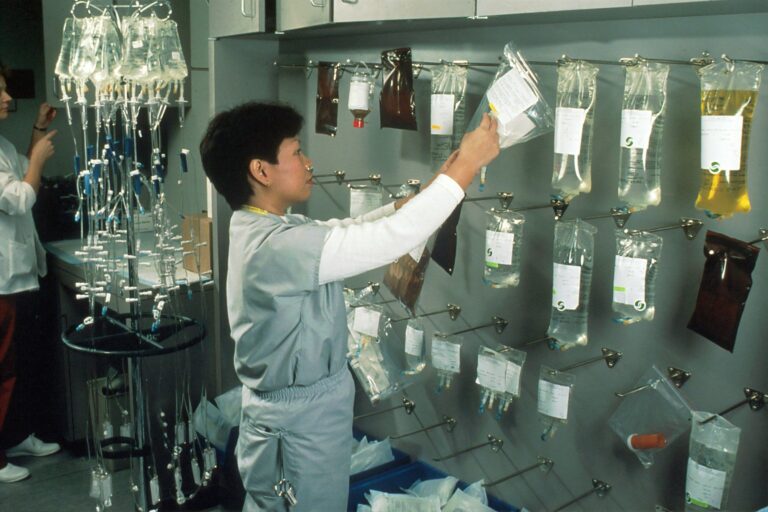
When you are on an integrative protocol, you may need regular IV treatments – high-dose vitamin C, B12, Curcumin, other infusions. If you are relying on clinic appointments for every session, you’re looking at multiple trips per week, waiting rooms, scheduling conflicts with chemo days, and a logistical burden that becomes unsustainable fast.
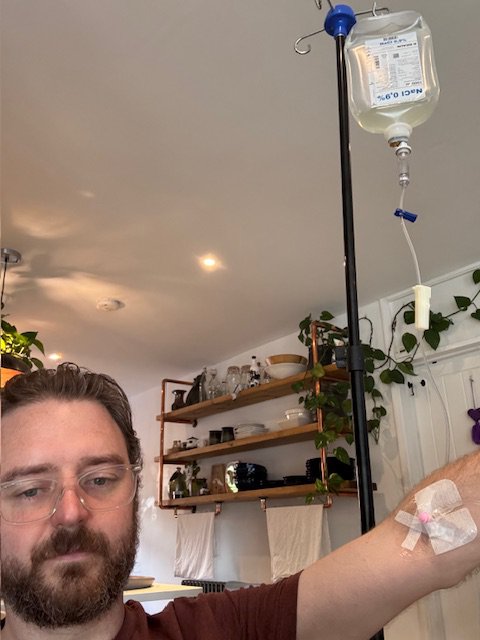
I was fortunate. My partner Ana went and got medically trained to be able to administer my IVs at home, and atop her we also had our amazing friend Jo who stepped in, as a registered nurse, to help also. That meant I could self-manage high-dose vitamin C and other supports on my own schedule, without spending half my life in transit.
Not everyone has that option. But the principle holds: think about the practical infrastructure of your protocol before you commit to it. Where will you get your IVs? How often? Can you access a home service? Is there a local clinic that can accommodate your treatment calendar?
What I’d do differently: I’d map out the full logistics before starting the integrative protocol – not discover the gaps three weeks in when you are too exhausted to solve them.
Step 6: Dial In Your Environment and Lifestyle
Cancer doesn’t exist in isolation. It exists in a body, in a home, in an environment. And that environment either helps or hinders your recovery.
Here is what we changed:
- Mould remediation – we discovered mould in our home and had it professionally removed. Mycotoxins are immunosuppressive. When your immune system is already compromised by cancer and chemotherapy, the last thing you need is your house making it worse.
- Air and water purification – we installed medical-grade air filters and a multi-stage water filtration system. The goal was to reduce the toxic load on my body so it could focus its resources on fighting cancer.
- Diet – I shifted to a mostly organic, anti-inflammatory, plant-forward ketogenic approach. The rationale: cancer cells are metabolically inflexible and rely heavily on glucose. A well-constructed ketogenic diet reduces available glucose while providing your healthy cells with an alternative fuel source (ketones). This is not fringe theory – metabolic approaches to cancer are being studied at institutions including Boston College and the University of South Florida.
- Infrared sauna – heat shock protein activation, improved circulation, immune support, and one of the most effective stress management tools I have found.
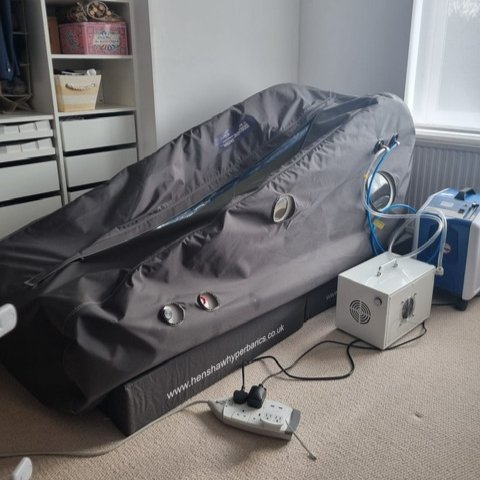
- HBOT – hyperbaric oxygen therapy increases tissue oxygenation throughout the body. Cancer cells tend to thrive in low-oxygen environments. Regular HBOT sessions were part of my strategy to make the terrain less favourable for cancer growth.
- Red light therapy – daily photobiomodulation sessions for inflammation management, cellular energy support, and recovery between treatment cycles.
- Grounding, cold exposure, vibration therapy – each chosen for specific physiological reasons, each part of the daily routine.
It sounds intense.
It was.
But each intervention was chosen for a reason, supported by evidence, and integrated into a sustainable daily routine.
This was not wellness theatre.
This was infrastructure.
What I’d do differently: I’d start the environmental audit in week one. Mould testing, water testing, air quality assessment. You can’t build a recovery protocol in a toxic environment.
Step 7: Assemble Your Team – and Make Them Collaborators
No single doctor can save you. And if any doctor talks down to you for asking questions, find a different one.
The NHS provided my chemotherapy and immunotherapy.
Amanda provided naturopathic support.
Dr Kuhan built the integrative protocol.
Dr Isabella Cooper provided research and knowledge.
Jane McLelland provided support.
Astron provided the molecular data.
Ana managed the home IV programme.
I coordinated everything.
That last part is important. My team were truly amazing. But, I was the one connecting the dots between these practitioners. I was the one ensuring my oncologist knew what my integrative doctor was prescribing. I was the one cross-referencing drug interactions. I was the one keeping everyone aligned.
This is not how healthcare is supposed to work. But it is how it actually works when you are combining conventional and integrative approaches. You become the project manager of your own survival.
The practitioners I chose had one thing in common: they treated me as part of the team. They answered my questions. They explained their reasoning. They welcomed challenge. When I said “show me the evidence,” they showed me the evidence.
What I’d do differently: I’d interview practitioners before committing. Ask them: how do you feel about patients who do their own research? How do you collaborate with other members of the care team? If the answer is dismissive, walk away.
The Questions I Would Ask My Oncologist on Day One
If I were sitting in that plastic chair again, here is what I would ask before leaving the room:
- “What would you do if this were your diagnosis?” – This shifts the conversation from protocol to personal. You get more honest answers.
- “What are the limits of this treatment plan?” – Every option has a ceiling. Knowing it helps you plan for what comes next.
- “Are there clinical trials I should know about?” – If the answer is “I’m not sure,” that tells you something important about how proactively your options are being explored.
- “Can I get next-generation sequencing of my tumour?” – If they say no, ask why. If they say it is not necessary, ask what data they are using to select your treatment without it.
- “How will you support my overall health, not just target the tumour?” – This exposes the gaps. Nutrition, side effect management, recovery support, mental health – if none of these are in the plan, you need to fill them yourself.
- “What is the plan if this does not work?” – This is not pessimism. This is preparation. A roadmap beats a dead end.
None of these questions made me a doctor. But they made me a participant in my own care. And that shift – from passive to active, from patient to partner – is the single most important change I made.
The Mindset That Underpins Everything
If I could give every newly diagnosed cancer patient one thing, it would not be a supplement. It would not be a doctor’s name, or a protocol, or even hope.
It would be a mindset.
When you hear “it’s cancer,” your brain shuts down. You want someone to tell you what to do. Anyone. And that instinct – to outsource your survival to people who barely know your name – is the most dangerous thing you can do.
Standard care is a floor, not a ceiling. Accepting it as the limit of what is possible is how people run out of options before they run out of fight.
This past year and a half has taught me that survival is not luck – It’s literacy…
In your body.
Your data.
Your options.
Your rights as a patient.
I built my own protocol because I refused to wait for permission. Chemo, immuno, off-label drugs, mistletoe, metabolic therapy, environmental remediation – all of it built on one conviction: no one will ever fight for my life harder than me.
Doctors treat hundreds of people a year. You only get one body.
Can You Survive Stage 4 Cancer?
I’m not here to give you a statistic and tell you it defines your future.
Statistics describe populations.
They do not describe you!
What I can tell you is this: I was given an 11.5-month median prognosis. I’m writing this over eighteen months later with no visible disease on my scans. I’m not special. I’m not lucky. I’m stubborn, I’m informed, and I refused to treat a prognosis as a deadline.
Can metastatic cancer go into remission? Yes. Mine is heading there. So are others who took a similar approach – combining the best of conventional medicine with the best of everything else available.
The question isn’t whether stage IV cancer can be survived. The question is whether you are willing to do the work to give yourself the best possible chance.
Where to Start
If you’re newly diagnosed and don’t know where to begin, here’s the short version:
- Get your tumour sequenced (Astron Health)
- Search clinical trials (Trialport)
- Find an integrative oncologist (BSIO directory)
- Find naturopathic support (Yes to Life can help with referrals)
- Start asking questions. Every appointment. Every time.
Cancer doesn’t pause while you figure things out. Start strong. Go wide. Fight smart.
And remember: doctors may set the options, but you set the questions. Questions change everything.
I am Dale Atkinson. In October 2024 I was diagnosed with stage IV oesophageal adenocarcinoma. I write about what I’ve learned – not as medical advice, but as one patient’s record of what he did, why he did it, and what he would do differently with the benefit of hindsight. If any of this helps you ask better questions, spot blind spots, or take back some agency, it was worth writing.
Nothing in this post should be taken as medical advice. Always consult your oncology team before making changes to your treatment plan.
Frequently Asked Questions
What is the first thing to do when diagnosed with cancer?
Get your tumour sequenced. Next-generation genomic profiling tells you exactly what you are dealing with at a molecular level – which treatments are most likely to work, which off-label drugs have mechanistic relevance, and which clinical trials match your profile. Treatment without this data is guesswork. Services like Astron Health offer comprehensive genomic profiling that goes far beyond what the NHS routinely provides.
Is integrative medicine good for cancer patients?
Yes, when it is evidence-informed and used alongside conventional treatment. Integrative oncology combines standard cancer care (surgery, chemotherapy, immunotherapy, radiotherapy) with complementary interventions that address the gaps – nutrition, inflammation, immune support, mental health, and side effect management. Major cancer centres worldwide now offer integrative oncology programmes. The key word is “integrative,” not “alternative.”
How do you mentally cope with a cancer diagnosis?
By taking action. The worst phase of my diagnosis was the waiting – sitting in uncertainty with no plan. The moment I started researching, asking questions, and building a protocol, the fear did not disappear but it became manageable. Agency is the antidote to helplessness. You do not need to have all the answers on day one. You just need to start asking the right questions.
What are off-label cancer drugs?
Off-label drugs are medications originally approved for other conditions that show evidence of anti-cancer activity. Examples include metformin (a diabetes drug studied for its effects on cancer cell metabolism), propranolol (a beta-blocker that may inhibit cancer cell migration), and others. These drugs are typically inexpensive, well-understood, and supported by growing bodies of research. An integrative oncologist can assess whether any are appropriate for your specific case based on your genomic profile and diagnosis.
What is the difference between an oncologist and an integrative oncologist?
A conventional oncologist focuses primarily on the tumour – surgery, chemotherapy, immunotherapy, radiotherapy. An integrative oncologist does all of that and also addresses the wider environment: nutrition, supplementation, off-label drug options, stress management, immune support, and lifestyle factors. They treat the whole patient, not just the disease. In the UK, the British Society for Integrative Oncology (BSIO) maintains a directory of qualified practitioners.
How much does private genomic sequencing cost in the UK?
Comprehensive genomic profiling through Astron Health costs around £5,000 (accurate as at time of writing). That is not a small number. But consider the alternative: months of treatment selected without molecular data, potential drug interactions missed, off-label options never identified. It is not routinely funded by the NHS, though some trusts offer limited genomic testing for certain cancer types. In my view, it is the single highest-value investment a newly diagnosed patient can make.
Subscribe to stay connected